Description
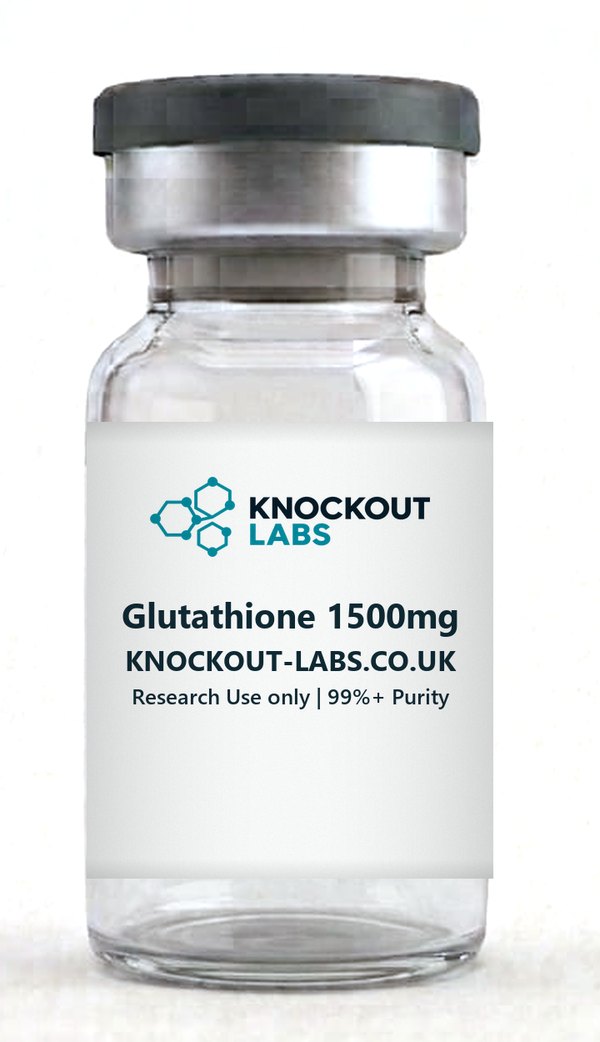
Glutathione 1500 mg: which form does the assay require?
Glutathione contains glutamate, cysteine and glycine. In GSH, cysteine has a free thiol group. In GSSG, two glutathione units are joined by a disulfide bond. The difference matters if the method measures redox balance or specifically requires reduced material. [G1] [G2]
| Specification item | What to look for |
|---|---|
| Redox form | An explicit designation of GSH, GSSG or the composition of a mixture, together with the assay used to distinguish them. |
| 1500 mg quantity | The basis of the declared mass, including the form, any counterion and other ingredients where relevant. |
| Report for the offered lot | A matching identifier, measurement date and units. A total-glutathione result alone cannot give a GSH/GSSG ratio. |
The neutral GSH reference entry in ChEBI gives an average mass of 307.328 Da. Match the supplied form before using this value in a calculation. [G1] See the glutathione compound profile for the naming and chemistry.
Checking the lot and its handling record
Request the specification and available lot documents before selecting the material. Check how the method measures identity, total amount and redox composition. A chromatographic purity percentage alone does not give the mass of GSH in a container. The batch-report guide and testing methods guide explain these records.
For a redox assay, document sample collection, preparation and analysis consistently. Oxidation during processing can change the measured balance. Use the container’s own storage instructions, distinct from handling procedures for analytical samples. [G4] The storage and stability guide describes the difference.
UK supply and product enquiries
Use the live product panel for price and availability. Knockout Labs supplies UK customers aged 18 or over and reviews orders before acceptance. Read the research-use and buyer eligibility policy and UK delivery information.
Research Use Only. Not for human or veterinary use.
What did the glutathione studies measure?
Total glutathione, the GSH/GSSG ratio and the activity of a glutathione-dependent enzyme describe different properties. A change in one cannot identify the cause of a change in another. The human studies below measured biomarkers using their own preparations. [G3] [G4] [G5] [G6]
Read the laboratory and human biomarker studies
Redox chemistry, GPX4 and sample handling
Glutathione-disulfide reductase uses NADPH to regenerate GSH from GSSG. In experiments on ferroptosis, researchers distinguished depletion of glutathione from direct inhibition of the enzyme GPX4. Both the amount of substrate and the activity of the enzyme can affect an endpoint. [G2] [G3]
Giustarini and colleagues found that processing cultured cells could raise the measured GSSG value through oxidation during handling. The same group also found that processing after an oxidant challenge could obscure an earlier change. The glutathione redox chemistry guide explains how to interpret sample handling alongside results. [G4]
Human biomarker findings
Allen and Bradley found no significant change between groups in urinary oxidative-stress markers after four weeks. Measurements of glutathione status were also unchanged. In a separate six-month trial, Richie and colleagues reported increases from baseline in several compartments. These results refer to different durations, preparations and comparisons. Neither study tested this 1500 mg research material. [G5] [G6]
For a comparison with other catalogue materials, see how NAD+, MOTS-c and glutathione differ.
Product questions
Does “1500 mg” identify reduced glutathione?
No. It is the listed nominal quantity. The specification must separately identify the redox form and the basis on which that quantity is declared.
Is a GSH/GSSG ratio the same as total glutathione?
No. The ratio compares the two forms; total-glutathione reporting combines them according to the assay’s stated convention. Check whether results use molecular concentrations or glutathione equivalents before comparing datasets.
Can this material be used as a supplement?
No. Knockout Labs supplies it for laboratory research only, not for human or veterinary use. The published human studies are scientific context, not instructions for using this product.
Selected research sources
- G1. ChEBI. Glutathione, CHEBI:16856.
- G2. IUBMB. Glutathione-disulfide reductase, EC 1.8.1.7.
- G3. Yang et al. (2014). GPX4 and ferroptotic cell death. Cell. DOI: 10.1016/j.cell.2013.12.010.
- G4. Giustarini et al. (2015). Thiol/disulfide analysis in cell cultures. Free Radical Biology and Medicine. DOI: 10.1016/j.freeradbiomed.2015.10.410.
- G5. Allen and Bradley (2011). Oral glutathione and oxidative-stress biomarkers. Journal of Alternative and Complementary Medicine. DOI: 10.1089/acm.2010.0716.
- G6. Richie et al. (2015). Oral glutathione and body stores. European Journal of Nutrition. DOI: 10.1007/s00394-014-0706-z.